[1] Behind Closed Doors: Presidential Meetings and Strategic Public Disclosure
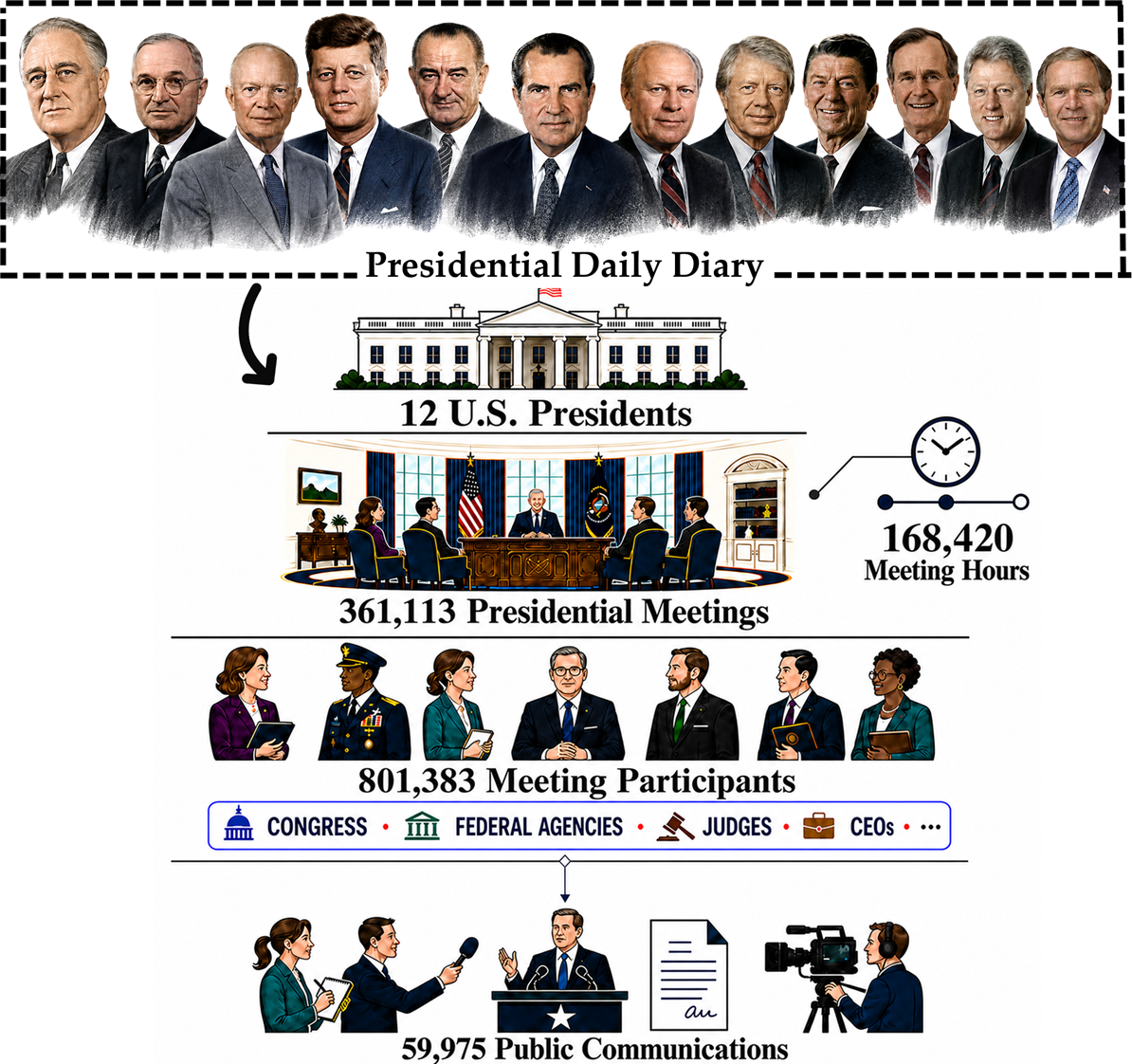
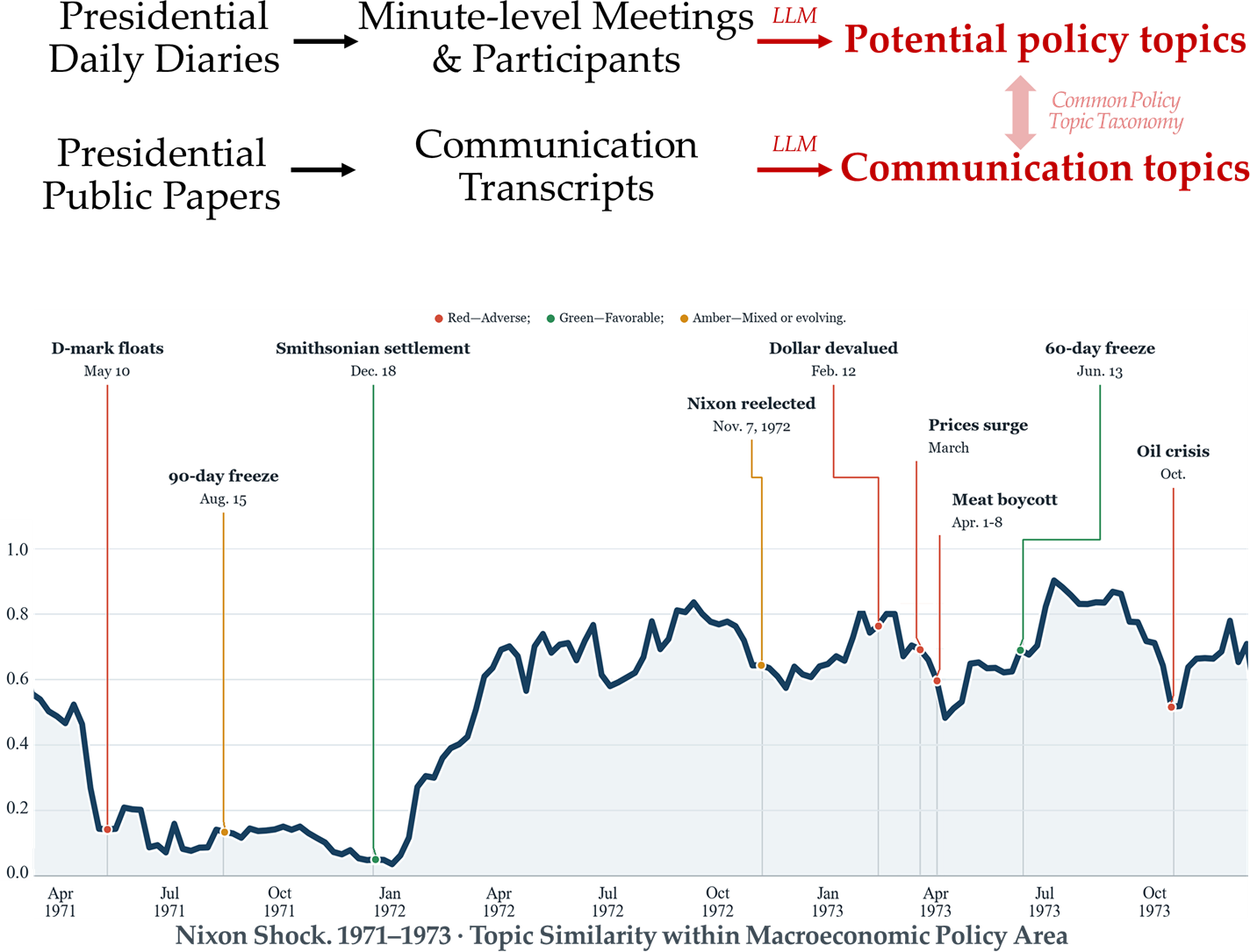
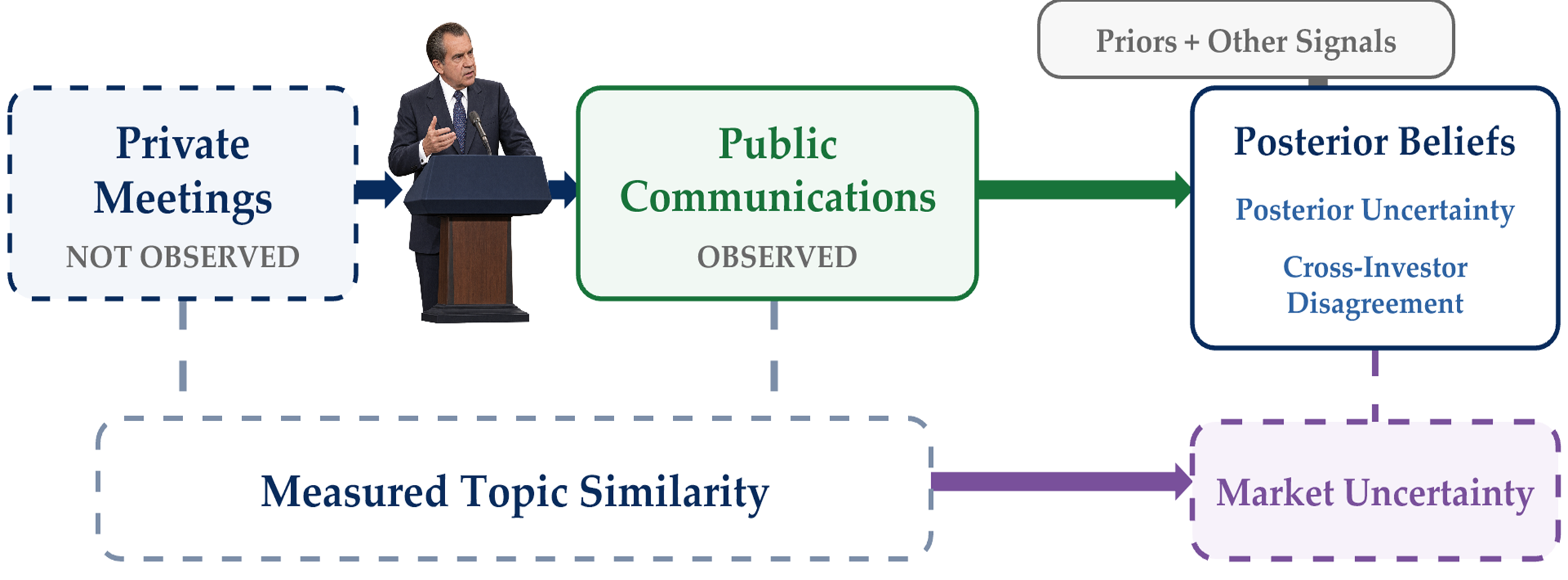
The public cannot fully observe what the U.S. president is working on, and the president chooses what to communicate publicly. I examine what drives this strategic disclosure choice and its capital-market implications. Using Presidential Daily Diaries, I reconstruct the president’s minute-by-minute schedule from 1935 through 2009. I use an LLM-assisted process to identify the potential policy topics discussed in each presidential meeting and use the same process to identify the topics in the president’s public communications. I then measure the similarity between potential meeting topics and presidential public communications. I find evidence that suggests presidential public communications more closely reflect what the president is working on when the issues are important to voters and less closely when they are politically divisive. Specifically, presidents communicate relatively less about issues that divide their own party but relatively more about issues that divide the two parties. Greater similarity between potential meeting topics and presidential public communications is associated with lower subsequent market uncertainty at both the aggregate and firm levels. Additional analyses suggest that when presidential approval is relatively low, presidents communicate more about voter priorities and less about within-party divisions. Presidential public communications also more closely reflect what the president is working on near Election Day when the incumbent seeks reelection and around funding deadlines that could produce a government shutdown. The negative association between similarity and uncertainty is stronger among firms with greater exposure to government demand and weaker among firms that meet with the president. Together, these findings are consistent with presidents weighing political benefits and costs when choosing what to communicate publicly, as suggested by voluntary disclosure theory, and with presidential public communications having capital-market implications.